HOMEOWNERS GUIDE
Roof age and material: why insurers care so much
Ask a room of homeowners what sets their premium and most will say location. Ask an insurer and the roof comes up immediately. The roof decides how often water gets in, and water writes more cheques than almost anything else in a homeowners book of business.
Disclaimer: Published averages and ranges, not a quote. This page is not insurance advice. Your premium will differ based on your home, location, claims history, and insurer.
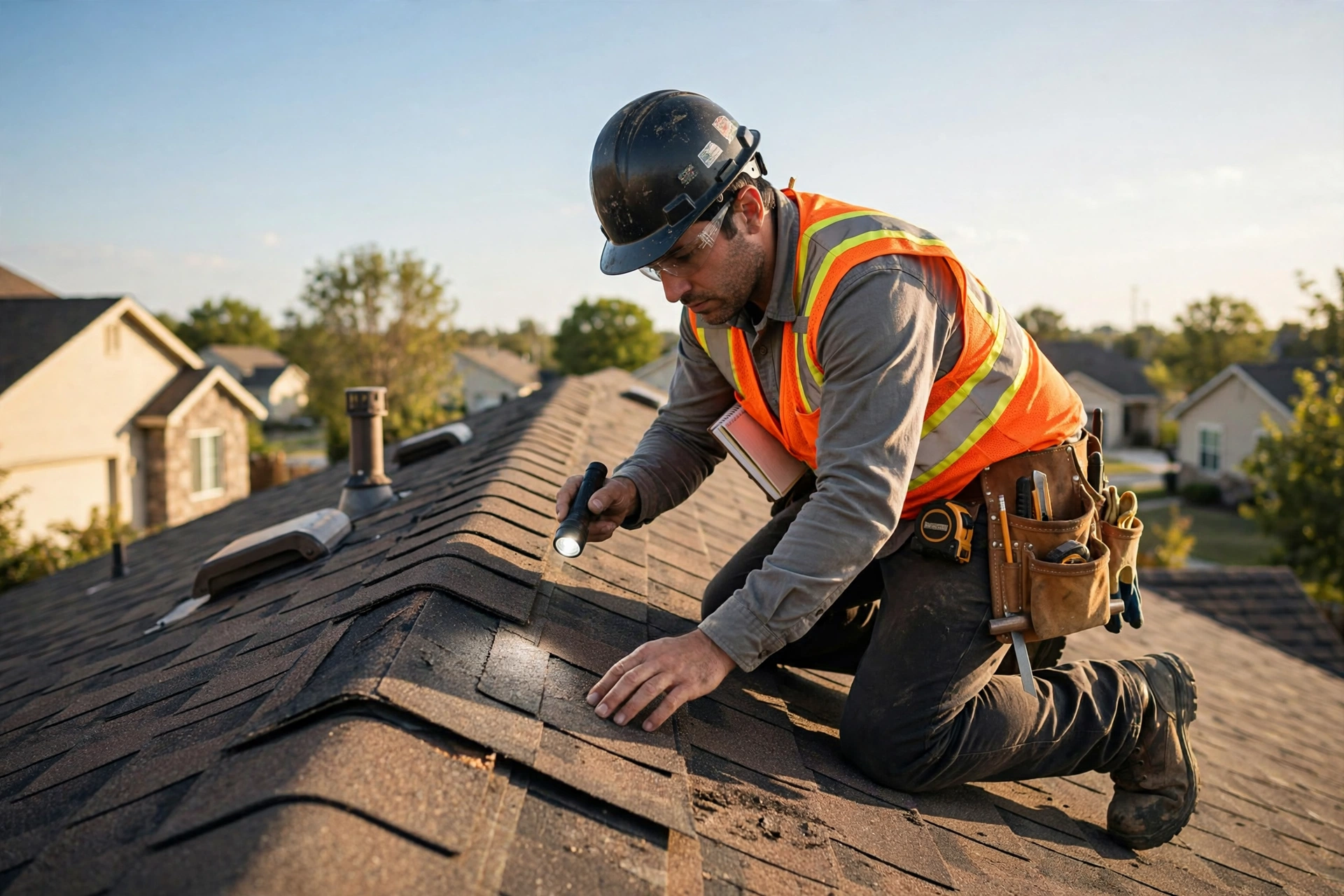
The roof is a claims gate, and insurers price gates
A roof sheds wind-driven rain, holds against hail, and keeps small failures small. As it ages, shingles lose granules and flexibility, fasteners work loose, flashing tires, and a storm that a new roof shrugs off starts finding its way to sheathing, insulation, ceilings and wiring. The claim that follows is rarely just a roof claim. It is water in walls, mould if it sits, and interior repairs that cost several times the leak. Insurers have paid that bill often enough to treat roof age as one of the strongest signals they can see from outside your home. That is why renewal questionnaires ask about the roof before they ask about almost anything else, and why aerial photos and inspection reports increasingly feed the answer.
How roof age shows up in your price and your terms
In our own benchmark model, roof age moves the adjusted premium by printed factors: a roof aged 0-10 years at 0.95, 10-20 years at 1.0, 20+ years at 1.2, and an unknown age or older material at 1.35. Those are this site’s simple factors for illustration, not an insurer tariff, but the direction matches how insurers behave. Applied to the national average we cite, $2,470, the difference between the newest and oldest roof factors is the difference between roughly $2,347 and $3,335 a year. Price is only half of it. Terms change too. Older roofs can trigger inspections, exclusions, non-renewal, or a settlement schedule that pays a depreciated amount. A policy can look cheaper precisely because it quietly pays less for the roof, and you will not find that out from the premium page. You find it in the roof settlement wording.
Material matters the way age does
Material changes both lifespan and claim shape. Standard asphalt shingles are the baseline most pricing assumes. Impact-resistant shingles can earn credits in hail-prone areas because they survive storms that shred standard shingles. Metal and tile last longer and resist wind differently, which insurers read through their own loss history rather than through a brochure. Wood shake reads as a maintenance and fire question in many markets. None of this means one material is always cheaper. It means the roof you have is being priced as a specific object, not as a line that says roof. If you replace a roof, the material choice is an insurance conversation as well as a contractor conversation, and the time to have it is before the old roof comes off, when documentation of the upgrade is easiest to create.
The settlement question to ask before renewal
Ask exactly this: if my roof is damaged beyond repair tomorrow, do you pay replacement cost or actual cash value, and does a schedule reduce the payment as the roof ages? On a newer roof the difference may be academic. On a roof in its late teens it is the whole claim. An actual cash value settlement on an old roof can leave you funding most of a new roof yourself, stacked on top of the deductible. Also ask whether wind or hail carries a separate, possibly percentage, deductible on your policy. Our deductible guide does that arithmetic: 2% of a $500,000 dwelling limit is $10,000 out of your pocket before the insurer pays a dollar toward the storm. Roof age, settlement basis and deductible shape together decide what a storm really costs you. Premium is the fourth number, not the first.
Documentation: the cheap work that pays
Insurers price what they can verify, and an undocumented roof defaults to suspicion. Keep the installation contract or invoice, the material specification, any contractor statement of age, permits where they exist, and dated photos after repairs. If you bought the home with the roof already installed, your purchase inspection report, seller disclosures and any repair records from your ownership are the file. When you replace or substantially repair a roof, tell your insurer and send the paperwork rather than waiting for them to notice. A documented newer roof is how the 1.2 factor becomes the 0.95 factor in real pricing, and the same file is what you want in hand if a claim is ever adjusted using the wrong roof age. Five minutes of filing a year beats a dispute after a storm.
When replacing the roof is, and is not, an insurance move
Replacing a roof solely to chase a premium saving rarely pays back quickly. If a roof costs $14,000 and the saving is a few hundred dollars a year, the premium arithmetic alone takes decades. Replacement makes sense on insurance grounds when the roof is near the end of its service life anyway, when an insurer will not renew or will only offer depreciated settlement, or when you are stacking the job with work that is already planned. Even then, tell the insurer before the job, not after. Some will re-underwrite mid-term, some at renewal, and some will want the material and age documented in a specific way. Knowing the rule before renewal avoids the surprise non-renewal that arrives when a family has the least time to shop. Pair this with our premium lowering guide for the savings that do not require a five-figure roof to unlock them.
Common questions
Why do insurers care so much about the roof?
The roof is the first line of defence against water, and water damage is a frequent and costly claim type. An older roof is more likely to leak, to lose shingles in wind, and to turn a small event into interior damage. Insurers price that likelihood, and some restrict settlement on older roofs.
What is the difference between replacement cost and actual cash value roof settlement?
Replacement cost settlement pays the cost to replace with similar material, subject to the deductible. Actual cash value pays the depreciated value of the roof that was lost, which on an old roof can be a small fraction of replacement cost. Ask which one your policy uses before you need it.
Should I replace my roof just to lower my premium?
Rarely for the premium alone. Run the arithmetic: compare the roof cost with the annual saving. Replacement usually makes sense when the roof is near end of life, when an insurer will not renew, or when settlement terms on the old roof leave you exposed. Those are roof decisions first.
How do I document my roof age?
Keep the installation invoice, a contractor statement, permits, or dated photos. If you bought the home with the roof already on, the inspection report and seller disclosures help. Tell your insurer when a roof is replaced or repaired so the record changes.
Sources and verification
National average $2,470: Bankrate True Cost of Home Insurance report (press release, August 25, 2025), 2025, verified 2026-10-04. Roof factors (0.95, 1.0, 1.2, 1.35) are this site’s published benchmark model, printed on the benchmark page, shown here to illustrate direction and scale, not as any insurer’s tariff. State figures: costs by state. See Methodology and the Disclaimer.